
If I could recommend only one active skincare ingredient for long-term skin health, apart from sunscreen, it would be vitamin A. It is the most studied ingredient in skincare, with decades of evidence for fine lines, pigmentation, acne and overall skin quality.
I’m Dr Ed Omarjee, a cosmetic physician with nearly 20 years’ experience in skin and cosmetic medicine, and I run The DOC Clinic in Hoppers Crossing and Ashburton. To be clear, this blog is about vitamin A applied to the skin as a cream or serum, not vitamin A tablets. Vitamin A can be confusing because it goes by so many names, so let’s break it down.
How vitamin A works in the skin
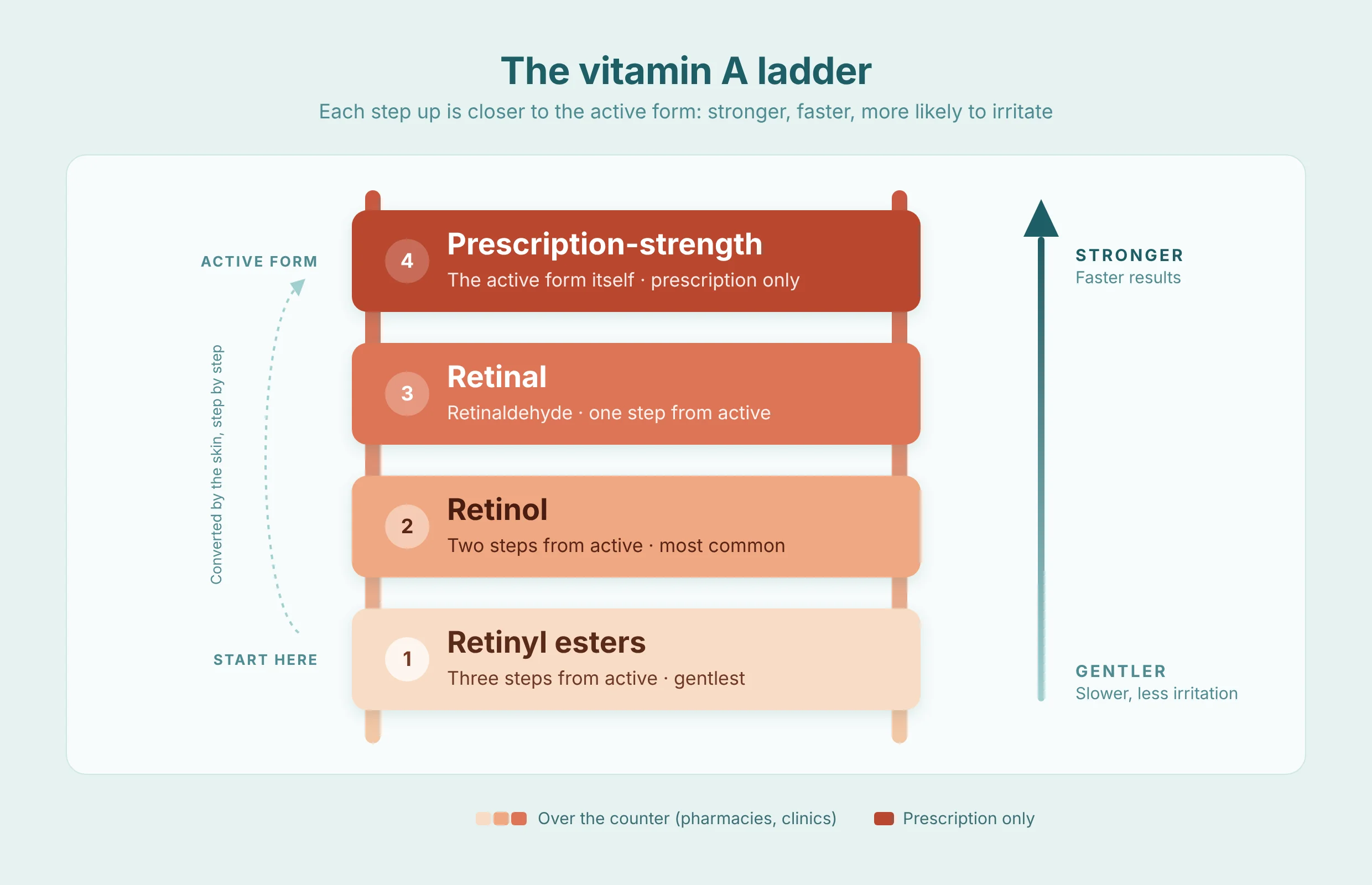
Skin cells have receptors that respond to the active form of vitamin A. Every over-the-counter product has to be converted by the skin, step by step, into this active form before it works:
Retinyl esters → retinol → retinal → active vitamin A
Each conversion step loses some strength. The further a product sits from the active form, the gentler it is but the slower and milder its effect. The closer it sits, the stronger it is, with a higher chance of irritation.
The four main types
- Retinyl esters (e.g. retinyl palmitate, retinyl propionate) The gentlest form, needing three conversion steps. A good starting point for sensitive skin or vitamin A beginners. Examples include the Olay Regenerist Retinol24 range, which uses a retinyl ester, and The Ordinary Granactive Retinoid emulsions, which use a newer gentle ester called HPR.
- Retinol The most common over-the-counter form, available in many strengths, usually from 0.1% to 1%. Popular examples include The Ordinary Retinol in Squalane, CeraVe Resurfacing Retinol Serum, Neutrogena Rapid Wrinkle Repair, La Roche-Posay Retinol B3 Serum and SkinCeuticals Retinol 0.3, 0.5 and 1.0. The DOC clinic stocks Toskani Retiseal Peel Booster, a 1% pure Retinol (high potency product), designed for those accustomed to retinoids.
- Retinal (retinaldehyde) Only one step away from the active form, so it works faster than retinol, and it has some antibacterial benefit for acne-prone skin. Examples include Medik8 Crystal Retinal (in graded strengths), Avène RetrinAL and Murad Retinal ReSculpt. In the clinic I stock the Toskani Retin Pro Age serum and cream, a gentler blend of retinoic acid and hyaluronic product designed to be comfortable for most skin types. You’ll find many of these items at pharmacies such as Chemist Warehouse and beauty retailers such as Mecca. Ranges change often, so check the label for the actual form of vitamin A, not just the word “retinol” on the front.
- Prescription-strength vitamin A The active form itself. It needs no conversion, so it is the strongest and has the most clinical evidence. It is only available on prescription in Australia. To use it, you’ll need a consultation with me so I can check it is suitable for you, choose the right strength and guide you through starting it.
The benefits
With consistent use, vitamin A:
- Stimulates new collagen, mainly types I and III, the types that give skin strength and firmness
- Slows the breakdown of existing collagen
- Smooths fine lines and improves texture
- Fades pigmentation and sun spotsby speeding up cell turnover and evening out pigment
- Makes pores look smaller and helps regulate oil
- Treats and prevents acne
- Improves overall brightness and skin thickness over time
Results are gradual. Most people see texture and glow improve within four to eight weeks, while collagen and fine line changes take three to six months or more. Vitamin A is a long-term commitment, not a quick fix.
Side effects, and my tricks to avoid them
The common early side effects are dryness, flaking, redness, tightness and sometimes stinging. This is often called “retinisation” and usually settles within two to six weeks. Some people also get a temporary breakout, called purging, as skin turnover speeds up.
Here is how I get patients through this stage comfortably:
- Start low and slow. Use a mild strength two or three nights a week, then build up to nightly over several weeks.
- Use a pea-sized amount for the whole face. More is not better. Avoid the corners of the nose and mouth, and the eyelids.
- Apply to dry skin. Wait 10 to 20 minutes after cleansing, as damp skin absorbs more and irritates more.
- The sandwich method. Apply a light layer of moisturiser, then your vitamin A, then moisturiser again. This buffers the product without stopping it working.
- Short contact therapy for very sensitive skin. Apply the product, leave it on for 30 minutes, then wash it off. Do this for a week, then increase to one hour, then two hours, and so on until you can leave it on overnight.
- Keep the rest of your routine simple. Avoid exfoliating acids and scrubs on the same nights while you are getting used to it.
- Wear SPF 50+ every morning. Vitamin A makes the skin more sensitive to the sun, and sun damage undoes the benefits.
Products that work well alongside vitamin A
- Niacinamide (vitamin B3) strengthens the skin barrier, calms redness, helps pigmentation and controls oil. It pairs well with vitamin A and can reduce irritation.
- Vitamin C (ascorbic acid) is best used in the morning. It is an antioxidant that protects against sun and pollution damage, brightens pigmentation and supports collagen production.
- Hyaluronic acid and ceramide moisturisers restore hydration and support the barrier.
- Broad-spectrum sunscreen, every day, is non-negotiable.
A simple routine is vitamin C, moisturiser and sunscreen in the morning, and vitamin A with niacinamide and moisturiser at night.
Who should avoid vitamin A, or take extra care
Do not use topical vitamin A if you are:
- Pregnant, trying to conceive or breastfeeding
- Taking oral vitamin A medication for acne
Take extra care, and ideally get advice first, if you have:
- Rosacea, eczema or very sensitive skin
- A damaged skin barrier from over-exfoliation or other actives
- Perioral dermatitis
- A recent laser, peel, waxing or other procedure; stop vitamin A for several days beforehand and check with your practitioner before restarting
Book a consultation
Vitamin A works best when it is matched to your skin and supported by the right routine. If you’d like advice on which form suits you, or you want to discuss prescription-strength options, book a consultation with me at The DOC Clinic. I’ll assess your skin and put together a plan you can actually stick to.


