
What are periorbital veins?
Periorbital veins are blood vessels around the eye region that have become visible through the skin. They come in two main types:
- Blue or purple reticular veins are larger calibre vessels (typically 1 to 3mm in diameter) that sit slightly deeper in the skin. These are most often seen under the eyes, near the temples, or along the upper cheek where the skin is thin and translucent.
- Red spider veins (medically called telangiectasia) are very small surface vessels that appear as fine red threads. They’re more common on the cheeks but can also occur near the eyes.
Several factors contribute to these veins becoming more visible over time:
- Thinning of the skin with age, which makes underlying vessels easier to see
- Genetic predisposition to visible facial vasculature
- Cumulative sun exposure, which weakens skin and damages small vessels
- Loss of fat volume in the periorbital area
- Hormonal influences in some people
In most cases, periorbital veins are benign cosmetic vessels rather than a health concern. That said, sudden onset of visible vessels, swelling, or eye-area pain warrants medical assessment to rule out underlying causes.
How laser treatment works
The principle behind vascular laser treatment is called selective photothermolysis. The laser emits a specific wavelength of light that is preferentially absorbed by haemoglobin within blood vessels. When this happens, the light energy is converted into heat, which damages the vessel wall and causes the vein to coagulate and gradually collapse. Over the following weeks, the body’s natural processes reabsorb the treated vein.
Two main wavelengths are used in vascular laser treatment, each suited to different vein types:
- 1064nm Nd:YAG laser is used for deeper blue reticular veins and larger calibre vessels. This wavelength penetrates further into the skin and is less absorbed by surface pigment, which makes it the preferred option for veins around delicate facial structures and for patients across a wider range of skin types.
- 532nm laser is used for more superficial red vessels, including spider veins. The shorter wavelength is more strongly absorbed by oxygenated blood, making it suited to finer vessels closer to the skin surface.
At The DOC Cosmetic & Skin Clinic, Dr Omarjee uses several vascular laser platforms across the two clinic locations:
Ashburton clinic (DOC East)
- Cutera Excel V+ (1064nm and 532nm)
- Fotona Dynamis (1064nm)
- GME Flexsys (532nm) for fine spider veins
Hoppers Crossing clinic (DOC West)
- Cutera XEO (1064nm)
- Alma IDAS (532nm) for fine spider veins
Having access to multiple platforms allows the appropriate laser to be selected based on the type and depth of the vessels being treated. The choice of equipment is part of the assessment at consultation.
Eye safety during laser treatment near the eyes
Laser procedures performed close to the eye carry specific ocular safety considerations. Dr Omarjee uses two types of laser eye shields depending on where the vessels being treated sit anatomically:
- Intraocular eye shields are small sterile metal shields inserted directly onto the eye after numbing eye drops and a lubricating ointment are applied. These provide a protective barrier directly over the eye itself. They’re used when the vessels being treated sit above or within the bony orbit, including near the lower eyelid margin or on the upper eyelid.
- External metal eye shields sit on the skin over the closed eye. They’re used when the periorbital veins are below the bony orbit or on the sides of the eyes. No eye drops or lubricant are needed when external shields are used.
Both shield types are recognised protective measures for selected laser procedures around the eyes when used by trained medical practitioners. The choice between them is made by Dr Omarjee at the time of treatment based on where the target vessels sit. Even with eye protection in place, no laser procedure near the eye is entirely free of ocular risk, and the relevant considerations are discussed during consultation.
Areas that can be treated
Common treatment areas around the eyes include:
- Lower eyelid veins
- Veins along the upper cheek and periorbital junction
- Vessels in the crow’s feet region
- Blue reticular veins around the eye area
- Veins extending toward the temples
Not every vein is suitable for laser treatment. Suitability depends on the type of vessel, its depth, its location, and how the surrounding skin and underlying anatomy will respond. This is assessed at consultation.
Periorbital Veins
Before & After Gallery
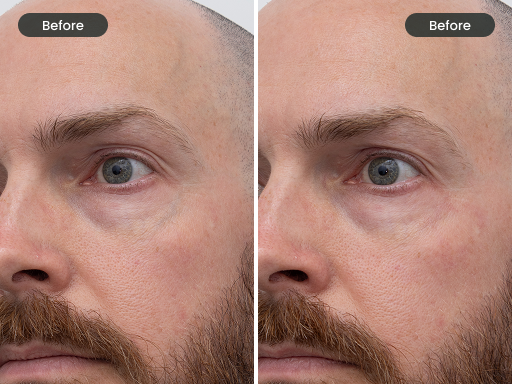
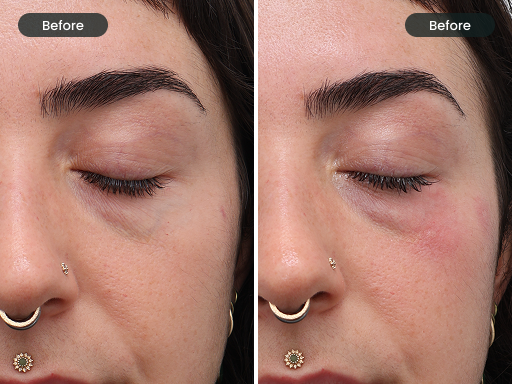
* Results will vary from person to person and with various degrees of efficacy.
Recovery after treatment
Recovery from periorbital laser treatment varies between people. Common short-term effects include:
- Localised redness in the treatment area
- Some degree of swelling, which can be more pronounced around the eyes given the loose tissue in that area
- Tenderness at the treatment site
- Temporary darkening of the treated vessels as they coagulate
Recovery time is variable. Many people return to everyday activities within a day or two, but some experience swelling that lasts several days or longer. Periorbital swelling can be more noticeable than swelling elsewhere on the face because of the eye area’s anatomy.
Less commonly, patients may experience:
- Bruising
- Discomfort that lasts longer than expected
- Temporary changes in skin pigmentation
- Blistering (uncommon)
Dr Omarjee will provide specific aftercare guidance, including sun protection, what to avoid in the days following treatment, and what signs would warrant getting back in touch with the clinic.
How many treatment sessions might be needed?
The number of treatment sessions depends on:
- Vein size and depth
- The number of vessels being treated
- Skin thickness in the treatment area
- Individual healing response
- Personal goals for clearance
Some vessels respond well to a single session. Others require multiple sessions to achieve further reduction. Not every vein can be completely cleared. Results vary between individuals. The likely treatment plan for your specific circumstances is something Dr Omarjee will discuss honestly at consultation rather than promise in advance.
Consultation and assessment
A consultation is required before any laser treatment. During the consultation, Dr Omarjee will assess:
- The type and depth of the vessels you’re concerned about
- Your skin type and overall facial anatomy
- Your medical history and any relevant medications
- Whether laser treatment is suitable for your circumstances
- Eye safety considerations and which shield approach would apply
- Potential risks, benefits, and realistic outcomes
- Whether further medical assessment is required before any cosmetic treatment
Dr Omarjee will also discuss whether the visible vessels are cosmetic only, or whether they may warrant additional medical workup before treatment.
Risks and important considerations
Vascular laser treatment, like any medical procedure, carries risks. Potential risks of periorbital laser treatment include:
- Swelling, which can be more pronounced in the periorbital area
- Redness
- Bruising
- Tenderness or discomfort after treatment
- Incomplete clearance of treated vessels
- Need for additional treatment sessions
- Changes in skin pigmentation, either lightening or darkening of the treated area
- Blistering (uncommon)
- Scarring (uncommon)
- Recurrence of veins over time or development of new vessels
Laser procedures performed near the eyes carry specific ocular risks. Strict eye protection protocols are followed, but no procedure near the eye is entirely without risk to the eye itself. These risks are explained in detail at consultation and form part of the informed consent process before any treatment is undertaken.
Results vary between individuals, and outcomes cannot be guaranteed. The treatment is not suitable for everyone.
About Dr Ahmed (Ed) Omarjee
Dr Ahmed (Ed) Omarjee is a registered medical practitioner with specialist registration in general practice. He has over 20 years’ of experience in cosmetic medicine, laser-based treatments, and vascular procedures.
His qualifications and memberships include:
- Bachelor of Medicine, Bachelor of Surgery, with Honours (MBBS Hons)
- Fellow of the Royal Australian College of General Practitioners (FRACGP)
- Fellow of the Cosmetic Physicians College of Australasia (FCPCA)
- Fellow of the Australasian College of Aesthetic Medicine (FACAM)
Frequently Asked Questions
Are periorbital veins dangerous?
Most visible periorbital veins are benign cosmetic vessels. However, sudden onset of new visible veins, swelling, or eye-area pain should prompt medical assessment to rule out an underlying cause before considering cosmetic treatment.
Is the treatment painful?
Pain experience varies between people. Most patients describe a brief snapping or warming sensation with each laser pulse. Some find this manageable; others find it more uncomfortable. Cooling and other comfort measures are used during treatment.
Do the veins disappear immediately?
Some vessels appear reduced shortly after treatment, but full results develop over several weeks as the body reabsorbs the treated vessels. Some vessels respond better than others, and not all veins can be completely cleared.
Is there downtime?
Some recovery is typical. Redness, swelling, and tenderness in the treatment area are common in the days following treatment. Periorbital swelling can be more noticeable than swelling elsewhere on the face. Recovery time varies between individuals.
Can makeup be worn afterwards?
This depends on how your skin responds to treatment. Dr Omarjee will give specific guidance based on your individual circumstances.
Can all under-eye veins be treated?
No. Suitability depends on the type, depth, and location of the specific vessel. This is assessed at consultation.
Are eye shields safe?
When used appropriately by trained medical practitioners, eye shields are a recognised protective measure for selected laser procedures around the eyes. They don’t eliminate ocular risk entirely, which is one of several reasons careful clinical assessment is essential before treatment.
Can the veins come back?
Yes. New visible vessels can develop over time due to ageing, genetics, sun exposure, or thinning of the skin. Treatment of existing vessels does not prevent new ones from forming.
Is this treatment suitable for darker skin types?
The 1064nm Nd:YAG wavelength can generally be used across a wider range of skin types than some other vascular lasers, because it is less absorbed by surface pigment. Individual suitability is still assessed at consultation.
Can people under 18 attend a consultation for this treatment?
No. We don’t offer cosmetic consultations or treatments to people under the age of 18, in line with current professional guidelines.
Book a consultation
To discuss laser treatment for visible veins around the eyes, contact The DOC Cosmetic & Skin Clinic to arrange a consultation with Dr Ahmed (Ed) Omarjee at either our Ashburton (East) or Hoppers Crossing (West) location.


